
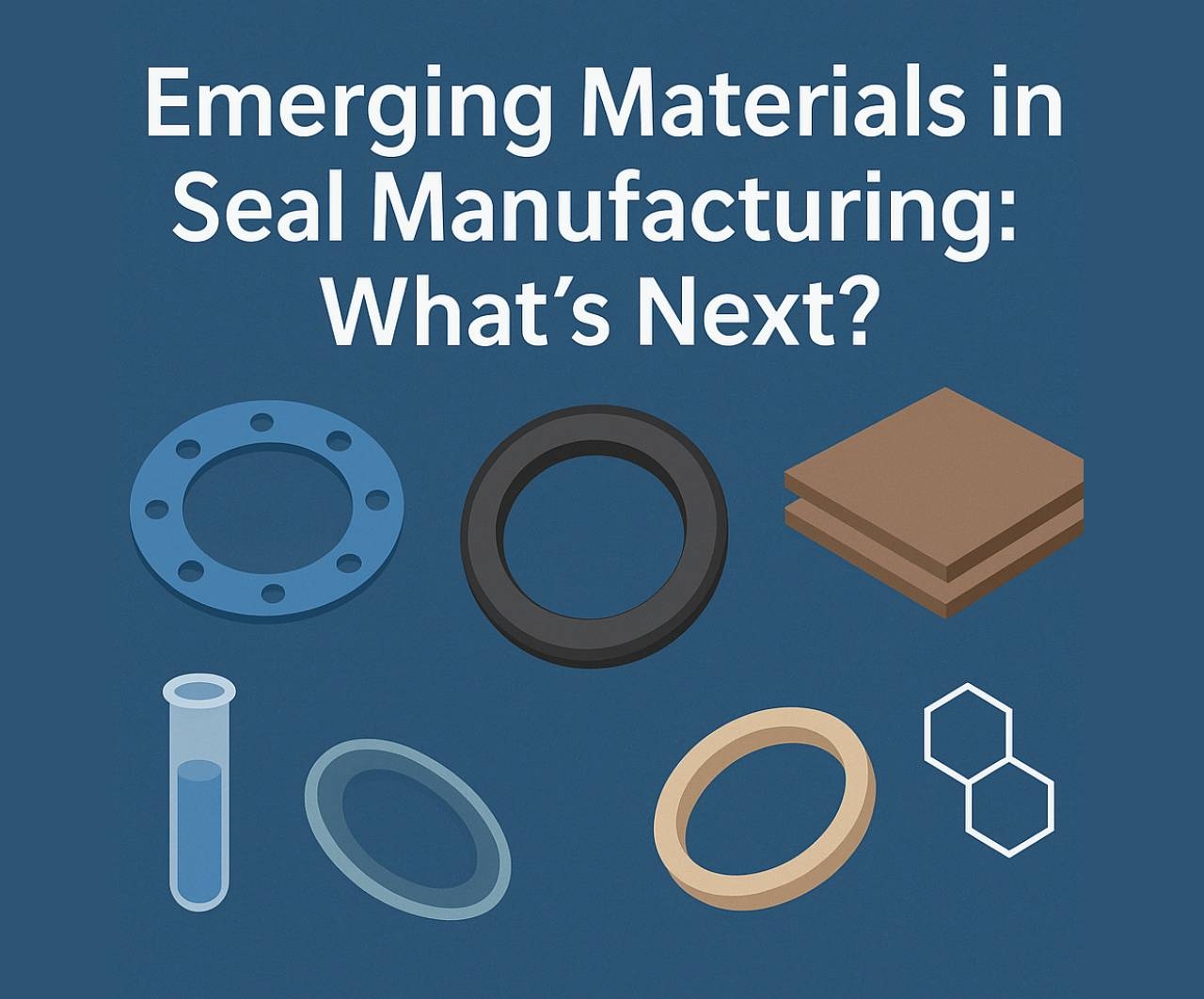
The sealing industry is undergoing a rapid transformation driven by innovation, sustainability, and performance demands. As industries like automotive, aerospace, pharmaceuticals, oil & gas, and manufacturing push for higher efficiency, seals must evolve to keep up. This has led to a new wave of emerging seal materials, groundbreaking advanced sealing technologies, and exciting developments shaping the future of seal manufacturing. Today’s sealing solutions are no longer just components—they are engineered systems designed to endure harsh environments, resist extreme pressures, and deliver long-term reliability. Know more..
The Shift Toward Innovation in Seal Materials
Seals play a critical role in preventing leaks, reducing friction, and maintaining containment in machines and industrial systems. Traditionally, materials like rubber, PTFE, silicone, and nitrile were the standard choices. But modern industrial needs demand much more—from chemical resistance to temperature resilience to energy efficiency.
This industry-wide shift is propelling companies to explore new methods and materials. The integration of emerging seal materials is now essential to guarantee consistent, high-performance sealing solutions for the toughest applications. These materials are developed not only for durability but also for sustainability and smart functionality.
1. High-Performance Polymers Redefining Seal Reliability
One of the biggest changes in the future of seal manufacturing is the adoption of high-performance polymers. These polymers outperform conventional elastomers and provide unique advantages, especially in extreme working conditions.
● PEEK (Polyether Ether Ketone)
PEEK seals can withstand extremely high temperatures, aggressive chemicals, and heavy loads. They are increasingly used in oil & gas drilling equipment, aerospace engines, and high-end automotive components.
● PTFE-Blended Materials
While PTFE has always been a go-to material, modern PTFE blends infused with nano-fillers, carbon fiber, or glass reinforcements deliver greater strength, reduced friction, and improved stability.
● UHMWPE (Ultra-High-Molecular-Weight Polyethylene)
Used in heavy-duty machinery, UHMWPE offers exceptional abrasion resistance. It’s ideal for industries where seals must endure continuous impact and wear.
As industries constantly seek higher efficiency and operational reliability, these polymers represent the next generation of advanced sealing technologies.
2. Metal-Polymer Hybrid Materials: Strength Meets Flexibility
Hybrid materials are gaining momentum because they combine the best mechanical and chemical properties of metals and polymers. They also help reduce weight while maintaining superior sealing performance.
● Thin Metal Cores for Extra Reinforcement
Hybrid seals often use stainless steel or titanium cores to provide shape stability and boost pressure tolerance.
● Polymer Coatings for Adaptability
These coatings—commonly fluoropolymers or high-temperature elastomers—create a flexible sealing surface capable of dealing with temperature changes and vibration.
In sectors such as aerospace and transportation, these advanced composites ensure seals can withstand fluctuating physical forces while maintaining tight sealing integrity.
3. Eco-Friendly Seal Materials for a Sustainable Future
Sustainability has become a major focus in the future of seal manufacturing. As companies aim to reduce environmental impact, manufacturers are exploring greener and recyclable materials without compromising performance.
● Bio-Based Elastomers
Derived from natural oils, plant-based components, and renewable sources, these elastomers can match the strength and elasticity of synthetic rubber.
● Recyclable Thermoplastic Elastomers (TPEs)
TPEs are becoming increasingly popular because they can be melted, reshaped, and reused—reducing industrial waste significantly.
● Low-VOC and Non-Toxic Materials
Environmental regulations are stricter than ever. As a result, seals made of low-VOC formulations are becoming standard in food processing, pharmaceuticals, and delicate chemical applications.
These eco-friendly innovations demonstrate how emerging seal materials are moving toward a greener industrial future.
4. Nano-Engineered Seal Compounds: The Next Material Revolution
Nanotechnology is influencing nearly every manufacturing sector—and sealing solutions are no exception. Nano-engineered seal materials offer remarkable mechanical, chemical, and functional advantages.
● Nano-Fillers for Stronger Seal Structure
Adding nano-particles such as graphene, silica, or carbon nanotubes improves:
- Tensile strength
- Chemical resistance
- Abrasion performance
● Self-Lubricating Sealing Surfaces
Thanks to nano-layering technology, seals can reduce friction by distributing nano lubricants across their surface.
● Nano-Coated Heat-Resistant Surfaces
Nano coatings enhance thermal stability, making seals suitable for high-temperature turbines, compressors, and automotive components.
This integration marks a major leap in advanced sealing technologies, pushing performance boundaries previously thought impossible.
5. Smart Seal Materials: Intelligence Embedded in Every Seal
The next big wave in the sealing industry is the rise of intelligent, sensor-enabled materials. These innovations are turning traditional seals into smart components that monitor performance in real time.
● Self-Monitoring Seal Components
Smart seals use integrated micro-sensors to collect data on:
- Temperature
- Pressure
- Wear levels
- Chemical exposure
Real-time feedback helps companies avoid system failures and reduce downtime.
● Shape-Memory Polymers
Shape-memory seals can adapt to environmental changes. When exposed to heat, pressure, or electrical stimuli, they expand or contract to maintain constant sealing performance.
● Electrically Conductive Sealing Elements
These are ideal for preventing static buildup in fuel systems, turbines, and chemical processing plants.
This transformation is redefining the future of seal manufacturing, merging materials science with digital intelligence.
6. Ceramic-Infused Seal Materials for Ultra-Harsh Environments
Ceramics are not typically associated with flexibility, but infused ceramic materials offer an impressive combination of heat resistance and structural stability. They are especially useful in environments exposed to extreme heat or corrosive chemicals.
● High-Temperature Silicon Carbide (SiC)
SiC-based seals are commonly used in mechanical seal faces for pumps handling corrosive or abrasive fluids.
● Zirconia-Reinforced Elastomers
These elastomers offer greater rigidity while retaining the elasticity needed for sealing applications.
As the demand for high-temperature sealing grows, ceramic-infused emerging seal materials are becoming more relevant.
7. Graphene-Enhanced Seal Materials: The New Super Material
Graphene, known for its exceptional strength and conductivity, is beginning to revolutionize sealing material design.
● Ultra-High Mechanical Strength
Graphene-reinforced elastomers can endure high internal pressures without deforming.
● Excellent Chemical and Thermal Resistance
Graphene acts as a protective layer, preventing chemical penetration and heat damage.
● Improved Longevity
Graphene materials extend the lifespan of seals, reducing maintenance costs and minimizing downtime.
The adoption of graphene marks one of the most exciting steps in advanced sealing technologies.
8. Extreme Environment Seal Materials for Oil, Gas & Aerospace
These industries demand seals that can function under extreme circumstances—such as cryogenic temperatures, deep-sea pressure, or corrosive chemicals.
● Cryogenic-Grade Elastomers
Used in liquid gas transport, aerospace operations, and space exploration.
● High-Pressure Hydrogen Seals
With the rise of hydrogen energy, seals must resist gas permeation and brittleness.
● Fire-Resistant Sealing Materials
Ideal for mining, aviation, and high-heat production facilities.
Such innovations showcase how the future of seal manufacturing is adapting to global shifts in energy and engineering.
9. Additive Manufacturing (3D Printing): A New Era in Seal Production
Additive manufacturing is reshaping how seals are designed, tested, and produced.
● Custom-Made Seal Designs
3D printing allows for personalized seals tailored to specific applications.
● Faster Prototyping
Engineers can design, print, test, and refine seals in hours instead of weeks.
● Complex Geometries
Advanced printing enables intricate sealing structures that are impossible through traditional methods.
As 3D printing materials evolve, we will see even more new possibilities in emerging seal materials and creative sealing solutions.
10. Industry Trends Driving the Future of Sealing
Several mega-trends are shaping what’s next in sealing technology:
● Electrification of Vehicles
High-voltage battery systems require specialized sealing solutions.
● Renewable Energy Expansion
Wind turbines, solar systems, and hydrogen production facilities rely heavily on high-performance seals.
● Automation and Robotics
Robotic systems need precision-engineered, long-life sealing elements.
● Climate-Safe Manufacturing
Regulations demand materials that are eco-friendly and high-efficiency.
These trends ensure ongoing growth in advanced sealing technologies and constant innovation.
Conclusion: What’s Next for Seal Manufacturing?
The sealing industry is experiencing a breakthrough era fueled by new material science, sustainability, digital intelligence, and advanced engineering. Manufacturers are pushing boundaries through emerging seal materials, smarter and more durable designs, high-performance polymers, eco-friendly alternatives, and integration with Industry 4.0 systems.
From smart seals capable of real-time monitoring to graphene-enhanced elastomers and ceramic-infused materials for extreme environments, the future of seal manufacturing holds incredible promise. Companies that embrace these innovations will not only enhance product performance but also stay competitive in a rapidly evolving industrial landscape.
The journey ahead is exciting—and the next generation of advanced sealing technologies will set new standards for quality, efficiency, and reliability across every major industry. Know more..